
Call us
301-363-4651 (Available 9 a.m. to 5 p.m. CST from Monday to Friday)

| Code | CSB-RA010418A04acHU |
| Size | US$210 |
| Order now | |
| Image |
|
| Have Questions? | Leave a Message or Start an on-line Chat |
| Application | Recommended Dilution |
|---|---|
| WB | 1:500-1:2000 |
| ICC | 1:50-1:500 |
| IF | 1:30-1:200 |
Acetylation of histone H3 at lysine 4 represents a critical epigenetic modification that influences chromatin accessibility and transcriptional regulation. This mark, found across the highly conserved histone H3.1 variants encoded by multiple HIST1H3 genes, plays a central role in gene activation and has become an important target for researchers investigating chromatin dynamics, cell cycle regulation, and epigenetic mechanisms underlying disease states.
This recombinant rabbit monoclonal antibody, clone 4H6, offers the reproducibility and consistency that epigenetics research demands. Because it is generated from a defined sequence rather than traditional hybridoma methods, you can expect uniform performance across experiments and between lots—an essential consideration when tracking subtle changes in histone modification patterns over time or across treatment conditions.
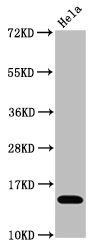
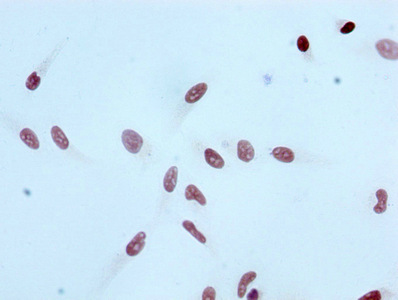
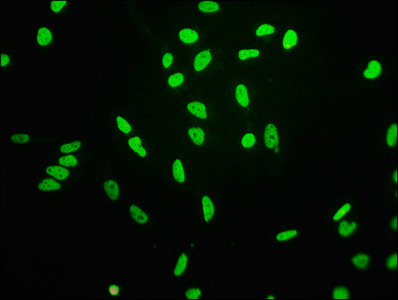
The antibody has been validated for multiple detection platforms, giving you flexibility in experimental design. Western blot analysis demonstrates clean detection of the expected 15 kDa band in HeLa whole cell lysates treated with sodium butyrate, a histone deacetylase inhibitor that enriches acetylated histone populations. This treatment-responsive detection confirms the antibody's specificity for the acetylated form. Immunocytochemistry and immunofluorescence applications have also been validated in HeLa cells, with immunofluorescence showing clear nuclear localization consistent with histone biology when counterstained with DAPI.
Whether you are mapping acetylation landscapes, investigating chromatin remodeling complexes, or studying how environmental signals translate into epigenetic changes, this antibody provides a reliable tool for detecting H3K4 acetylation in human samples across multiple experimental workflows in epigenetics and nuclear signaling research.
There are currently no reviews for this product.





